 CASEFILE
The Evidence Review
"The scene speaks before the first witness opens their mouth — but only to those who know the language."
— Det. R. Harmon, Ret.
What the Scene Tells You Before Anyone Speaks
A structured course in the forensic arts — for civilians who suspect the answer was always in the evidence.
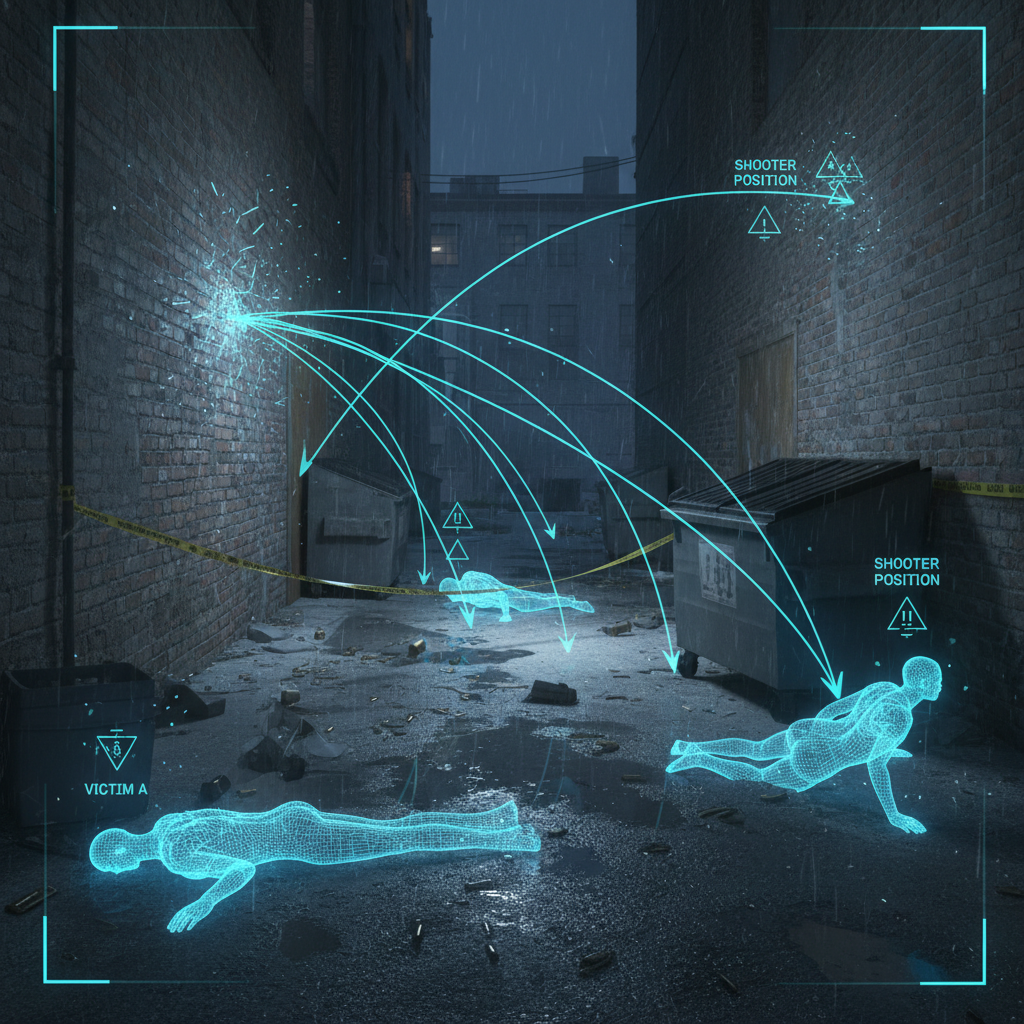
Every crime scene is a text. The broken glass tells you which direction the force came from. The position of a body suggests whether it moved after death. The absence of blood in a room where violence occurred is itself a clue — a redaction that demands explanation.
For decades, this language belonged exclusively to law enforcement. Investigators trained for years to read it. Forensic specialists spent careers decoding its grammar. The rest of us watched from behind yellow tape, receiving translated summaries and hoping they were accurate.
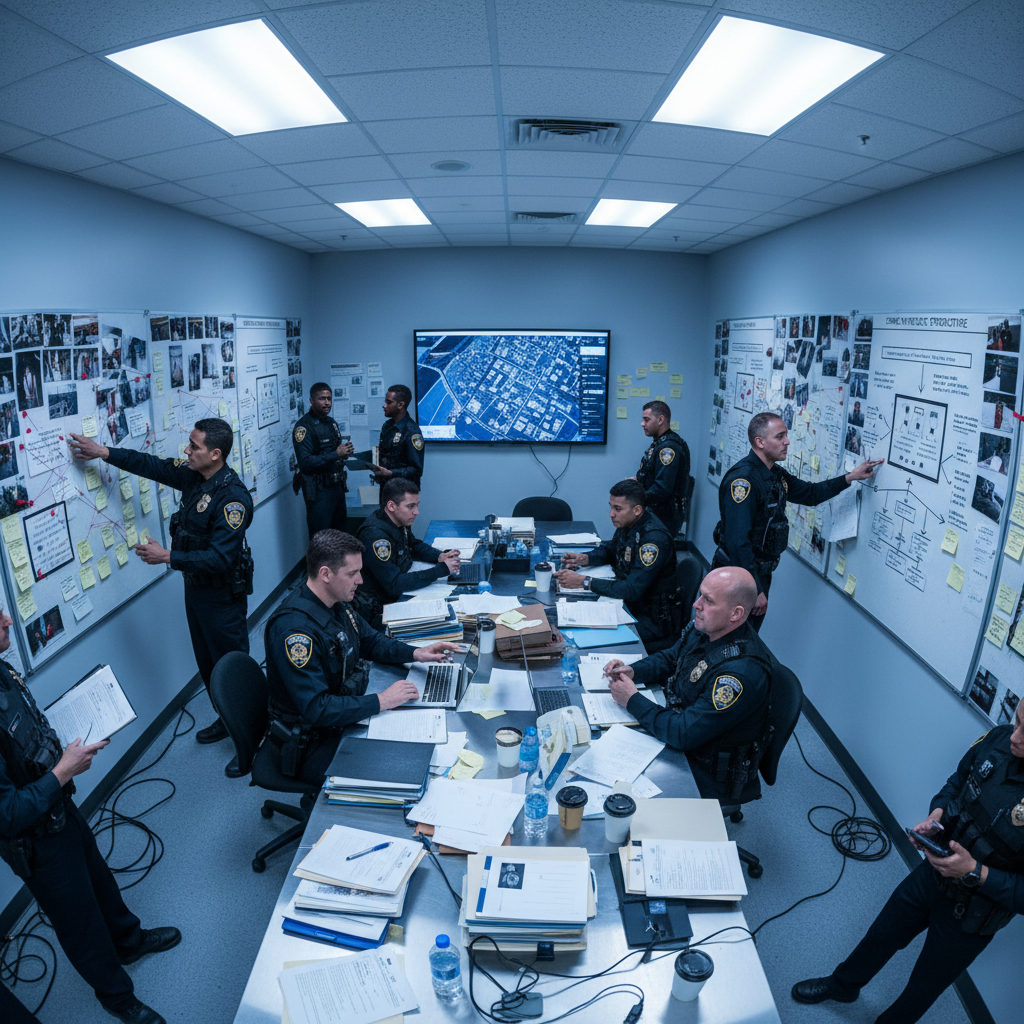
Casefile changes that. Built by retired homicide investigators and forensic consultants, this course teaches the actual methodology — not dramatized television procedure, not podcast speculation, but the structured analytical framework detectives use when they walk into an unknown scene.
You will learn to read blood spatter geometry. You will learn to detect inconsistencies between physical evidence and witness testimony. You will learn to reconstruct timelines from fragments, identify staging, and understand why certain cases that appear solved remain, in the eyes of those who know the method, still open.
"Case File #001: A Practice Scene" — 12 pages of actual methodology.
Request PDF→You already notice what others miss.
You rewound that podcast episode three times. Not because you didn't hear it — because something didn't line up. The timeline. The witness's phrasing. The detail that appeared in the police report but vanished from the trial transcript.
That instinct isn't morbid curiosity. It's the beginning of analytical thinking. You were doing investigative reasoning before anyone told you what to call it.
What you lack isn't intuition. It's framework.
Crime analysis is a language with grammar.
Blood spatter doesn't lie — but it requires translation. A circular stain means the source was stationary. An elongated ellipse tells you angle and direction of travel. Satellite drops indicate secondary transfer. Cast-off patterns reveal the number of blows.
This isn't speculation. It's physics applied to investigation. The same geometric principles that govern projectile motion govern the arc of a droplet. The same logic that underlies any scientific inquiry underlies forensic analysis.
The method is learnable. We built the curriculum.
Here is a scene. What do you see?
A body is found in a second-floor study at 6:40 AM by a housekeeper. The window is broken from the inside. A glass of scotch sits on the desk — half full, no fingerprints. The victim's shoes show no soil from the garden path visible through the window.
The official ruling: accidental fall. Three details in this description contradict that conclusion. One of them, if noticed, changes everything about the case.
Scroll to the next panel. Try to name all three.
Investigative literacy is civic literacy.
Wrongful convictions don't happen in a vacuum. They happen when juries can't evaluate forensic evidence. When communities can't interrogate official narratives. When the language of investigation belongs only to those with institutional authority.
Casefile exists because that asymmetry has consequences. Understanding how crime analysis works — really works — makes you a better juror, a more critical consumer of true crime media, and someone who can recognize when a case deserves another look.
This isn't entertainment. This is preparation.
Here is a scene. Three details contradict the official ruling.
Below are four evidence fragments from Case File #001. Click each to examine it. Identify which three contain contradictions to the "accidental fall" conclusion — and what each contradiction implies.
A 58-year-old retired accountant is found dead in his second-floor study at 6:40 AM. The window is broken. A half-full glass of scotch sits on his desk. No fingerprints on the glass. Garden visible through the broken window. Official ruling: accidental fall. Case closed within 72 hours.
Window glass: fracture pattern indicates force applied from interior. Sill: no soil transfer from garden path below.
Scotch glass: 0.3ml residue, no fingerprints detected. Surface: wiped post-pour. Condensation ring on desk surface: 47 minutes old at time of discovery.
Housekeeper statement: "I heard nothing unusual." Neighbour statement: "A car I didn't recognize left at 5:55 AM." Official report: no mention of vehicle.
Victim's shoes: clean soles, no debris. Study: second floor, accessible only via garden path or interior stairs. Garden path: dew-wet at time of death.
Instructors cleared for
field-level instruction.
Not journalists. Not podcasters. Retired investigators and forensic scientists who worked the cases — and now teach the method.

Det. Raymond Harmon (Ret.)
Homicide Division · 24 Years Service
Chicago PD — Major Crimes Unit
Crime Scene Reconstruction
Led investigation on the Lakeview Cold Case Review (2019) — 3 cases reopened.
Dr. Sylvia Okonkwo, Ph.D.
Forensic Pathology · 18 Years Academic
Northwestern University — Forensic Sciences
Blood Pattern Analysis · Wound Interpretation
Published "Geometry of Violence" (2021) — used in 14 state forensics curricula.
Marcus Delacroix
Forensic Investigator · 15 Years Field
FBI Behavioral Analysis Unit — Retired
Witness Statement Analysis · Deception Detection
Developed the TRACE interview protocol now used in 7 federal field offices.
What students write in the margins.
"I've listened to 400+ true crime episodes. This is the first time I've understood *why* the physical evidence matters more than the confession. Module 3 alone changed how I watch every documentary."
"I taught crime scene investigation for 22 years. I was skeptical. But the way they've structured the analytical framework — it's exactly how I'd teach it if I had to start over. Rigorous and accessible."
"Writing my third crime novel. The procedural accuracy I've gotten from this course has already saved me from three plot holes my editor would have caught. The timeline reconstruction module is invaluable."
"I always knew something was wrong with the official account of my uncle's case. This course gave me the framework to articulate exactly what. I'm not saying I solved it — but I know what questions to ask now."
You already belong in this room.
The methodology is learnable. The cases are waiting. One question stands between you and your first file.
"Open Your First Case"
Not ready to commit? Start with a practice scene.
Case File #001 is a 12-page PDF walk-through of an actual practice scene — the same exercise used in Module 1. No enrollment required.